Peaceful Pill Blog
Cancel Culture gets Uncancelled with Podcast Published
Read More
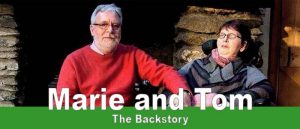
Marie Fleming & Exit International Ireland
Read More

Sarco goes Viral & the Backstory
Read More

Fudging the Facts in the Azide Wars
Read More
Ensuring Northern Territory Rights Bill 2021
Read More

The Azide Wars
Read More

Suicide Related Materials Offences Act
Read More

Celebrating 25 Years since the Rights of the Terminally Ill Act
Read More

Holocaust Survivor Zsuzsi Yardley dies in Switzerland
Read More

Australia Border Force Seize Peaceful Pill Handbook
Read More
July 13, 2015
What the Supreme Court Decision Means
If anyone was wondering what the Northern Territory Supreme Court really means, here it is. According to Exit International lawyers, the decision is a scathing account of the behaviour of the Medical Board of South Australia and the NT Medical Tribunal. Both failed miserably to apply the law.
The following was first published by Sparke Helmore Lawyers: Briohny Coglin and Mark Doepel and posted on Lexocology.
The full account is accessible via the Lexocology link above
Dr Philip Nitschke successfully appealed the Tribunal’s decision on the following grounds:
- the Tribunal misconstrued the Code in holding that it imposed an obligation on Dr Philip Nitschke to promote or protect the health of Mr Nigel Brayley and to assess, treat or refer Mr Brayley in circumstances where he was not a patient of Dr Nitschke
- in making its decision, the Tribunal denied Dr Nitschke procedural fairness by expanding the “conduct” based upon, which it was argued a reasonable belief had been formed that immediate action was required under s 156, without giving Dr Nitschke opportunity to respond in circumstances where the Board had deliberately confined its case, and
- the Tribunal erred in the construction of the Code by holding that advocacy about suicide and providing information to persons who might chose to end their own life was in breach of the Code.
The Court also found that:
Dr Nitschke was not given adequate opportunity to respond to the broader range of conduct ultimately relied upon by the Tribunal (noting that when he did attempt to tender additional materials, his attempt was refused for the reason that they were not relevant to the issues raised by the Board)
- the only issues that the Tribunal was required to determine were:did Dr Nitschke’s conduct after he received Mr Brayley’s emails in April 2014 breach the Code, particularly cl 1.4, and
- as a result of that conduct, whether the Tribunal reasonably believed that:Dr Nitschke posed a serious risk to persons, and
it was necessary to take immediate action to protect public health or safety - the medical practitioner’s “conduct” does not have to be connected with medical practice, but rather can occur in whichever capacity the medical practitioner is acting in at the time
- notwithstanding the above, there was no basis for applying the same general standards to Dr Nitschke and Mr Brayley that apply in a doctor/patient relationship
- clause 1.4 does not prescribe and identify any specific obligations, including the obligation to promote or protect the health of any person, irrespective of their relationship with the doctor
- the “responsibility to protect and promote health of individuals and the community” in cl 1.4 of the Code does not impose an obligation, standard or duty—the breach of which would constitute professional misconduct or unprofessional conduct
- the Tribunal’s findings may well be inconsistent with other express provisions in the Code, including supporting the autonomy of a patient to make decisions to obtain or refuse treatment
- where the allegation is one of a failure to act rather than an action, legal principles or expert evidence would ordinarily be required to establish the existence and content of the duty to act
- in the absence of any legal principles or expert evidence supporting the allegation that Dr Nitschke had professional obligations to take the steps identified by the Board after receiving Mr Brayley’s emails, it cannot be found that such obligations exist, and
- because there was no evidence that the conduct alleged by the Board could be in breach of the Code or the National Law, the Tribunal could not have formed a reasonable belief that, because of his conduct, Dr Nitschke posed a serious risk to persons and it was necessary to take immediate action to protect public health or safety.
Dr Fiona Stewart
(who is currently completing her final year of the LLB at Charles Darwin University, Darwin Australia)
Citation Requirements
To cite this article, please include reference to the author, the title, the date of publication & the citation link below:
http://www.peacefulpillhandbook.com/?p=1417
June 15, 2015
The slippery slope
Those who are opposed to rational people having the ability to make their own choices about how their life ends are fond of using the phrase ‘the slippery slope’ and also of quoting erroneous statistics from The Netherlands.
Steven Poole in The Guardian wrote a nice article on the origins of the phrase and why its use is problematic.
“The invocation of a slippery slope is almost always anti-rational fear mongering,” he writes. “The phrase acts as a little weapon of ready-made false reasoning that the wielder supposes to function as a knockout argument.”
I am not astounded by the simple lies perpetuated by the plethora of websites dedicated to this anti-rational fear mongering. People who feel that they are engaged in a kind of war on what they see as immorality will frequently use whatever methods they see fit to try and gain the advantage, and quoting erroneous or made up numbers without giving sources or references is the least of them. There’s not much one can say in response to that other than ‘show me the evidence’, but what about interpretations of figures that are correct?
For example the number of people successfully requesting medical help to end their lives in the Netherlands has doubled between 2008 (2331 people) and 2013 (4829 people). These are official figures from the Regionale Toetsingscommissies Euthanasie, the five regional government agencies charged with ensuring the appropriate implementation of the euthanasia law.
Whilst those of us on this side of the argument might be pleased with these figures, since far fewer people suffered needlessly in 2013 than in 2008, those who are opposed to a change in the law are horrified. They see it as incontrovertible evidence of the so-called ‘slippery slope’. But clearly it is inevitable if something becomes legal, that more people are likely to avail themselves of that legal thing over time – and to report it to the appropriate government agency. What would be more interesting is to correlate the figures with the numbers of people forced to ending their lives in non dignified non peaceful ways. Unfortunately the government agency is not charged with reporting on this but it would not be surprising if there was a significant corresponding reduction in those figures.
Dr.Johannes Klabbers
Citation Requirements
To cite this article, please include reference to the author, the title, the date of publication & the citation link below:
http://www.peacefulpillhandbook.com/?p=1388
April 27, 2015
Gotta Love the Irish
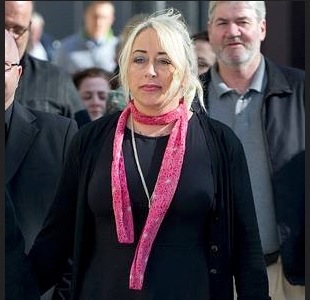
Gail O’Rorke arriving at Court
In a court case that has caused many to wonder about the state of the Irish nation, Dublin taxi-driver, Gail O’Rorke has recently seen her life played out in Ireland’s criminal courts.
Her crime?
To try to help her good friend and MS sufferer, Bernadette Forde, travel to Dignitas in Zurich for an assisted suicide.
Yet the whole plan come unstuck when a travel agent by the name of Rathgar Travel reported Gail to the police when she went to purchase tickets for the pair to make the 1.5 hour flight.
The prosecution told the court that it made no difference that the police foiled the plan and the trip to Switzerland never took place. Rather, in the eyes of the law it was what Gail allegedly did, as a good friend understandably would do, to help her friend that was the crime.
In reply the defence SC, Dermott McGuinness, said to the court
‘Did you ever think that you could go into a travel agents and book a flight and try and get the tickets and wind up on the wrong end of an indictment? Could you believe that?’
The answer is clearly no.
When the jury went out for their verdict on Monday 27 April, Gail O’Rorke had supporters of voluntary euthanasia/ assisted suicide watching carefully, and not just in Ireland.
A guilty verdict would have set an important precedent.
While not directly applicable to Ireland, a guilty verdict would have left the UK DPP’s Assisted Suicide Guidelines in tatters.
This is because, on almost every count, there was never any public interest in prosecuting Gail O’Rorke in the first place.
Was her status as a minority beneficiary in her friend’s will enough to have a jury believe that she ‘did it for the money’?
Or should her ignorance of the peculiar twist on the law have brought her down?
After all, Gail admitted to not realising that buying a one way plane ticket to Zurich so that her close friend could have the peaceful, lawful death that she so wanted was an offence?
Well blow me down, neither would most of us. And this is the point.
In most countries, in spite of assisted suicide being unlawful in the majority of places, no State authority has dared to go after the friends and family of a dying person; friends and family who ‘do the right thing’.
Who support their loved one in their quest for a peaceful, lawful end.
Not the Irish!
Assisted dying seems to be the Catholic Church’s last bastion of control.
The Church lost abortion when, in 2013, Ireland’s Parliament finally passed the Protection of Life During Pregnancy Act 2013 which allows terminations under strict conditions.
And the Church looks like losing the 22 May 2015 referendum on gay marriage too.
That leaves dying with dignity as their last battleground.
And it shows the Catholic Church as continuing to look away. It leaves their cruel and inhumane treatment of the sickest in society; those whose vulnerability through illness makes them unable to fight for their right to die when and how they choose.
The charges which the court ordered on Friday 24 April to be dropped were:
1. the procurement via the Internet of Nembutal from Mexico; the drug which Bernadette took to die; and
2. Gail’s help in organising Bernadette’s funeral prior to the time of her death – an instance of attempting to procure her suicide.
Were the stakes not so high, the past week of court room antics would have been laughable.
In a majority (note not unanimous verdict) the jury delivered the right and proper one verdict. ‘Not Guilty’. But what an awful and scandalous waste of Irish tax payers dollars. Surely the State can do better.
Dr Philip Nitschke
29 April 2015
Citation Requirements
To cite this article, please include reference to the author, the title, the date of publication & the citation link below:
http://www.peacefulpillhandbook.com/?p=1340
April 15, 2015
MET Interview Philip Nitschke Under Caution on 16 April 2015
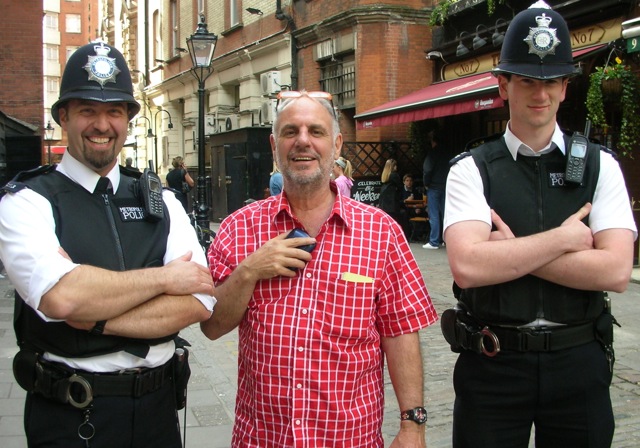
Philip with some friendly London Bobbies
So, the MET have received a vexatious complaint from pro-life UK and the Metropolitan Police want to interview Exit Director, Philip Nitschke, under caution?
Hell no, don’t talk about death and dying. At least not in England.
This matter is all about free speech. It is about the Religious Right not liking the right of others who are not of their way of thinking, wanting to talk about when and how they might die in a way that is peaceful, dignified and reliable.
Pro-life think death and dying is in the hands of God. For them it might be, for non-believers it is not.
While almost no one wants to die, absolutely no one wants to suffer dying. Coming to an Exit meeting and having your questions about death and dying answered in a non-emotive, factual yet sensitive manner can be hugely reassuring.
Just having access to this information can reassure a person who is elderly or who is seriously ill. From knowledge comes power. From knowledge comes a sense of being back in control and able to make one’s own informed decisions, should the need ever arise.
The whole idea of knowing about how to die peacefully and reliably, should things ever come to that, should not be a controversial issue. Rather, it’s an insurance policy for the future.
But in England it’s become a controversy.
Watch this space for more news on Thursday’s interview and its aftermath.
Will or will not, the Crown Prosecution Service decide that Philip Nitschke has breached the UK Suicide Act by answering the questions of hundreds if not thousands of Exit Members about their end of life choices.
Or will they respect the core individual rights and freedoms enshrined by British Human Rights Act and the European Convention on Human Rights and allow Exit members freedom of association and the freedom to access information that they wish?
Anon.
15 April 2015
Citation Requirements
To cite this article, please include reference to the author, the title, the date of publication & the citation link below:
http://www.peacefulpillhandbook.com/?p=1249
Exit